- The Noodle Network
- Posts
- 🍜 California probes Grok over..
🍜 California probes Grok over..
Wall Street is picking sides, robots are still useless with power tools, and California just pulled out the legal magnifying glass...
Welcome, Noodle Networkers.
Wall Street is picking sides, robots are still useless with power tools, and California just pulled out the legal magnifying glass. Let’s go. Wall Street is debating whether Alphabet or OpenAI wins the AI race. Investors are arguing like it’s a fantasy league draft, except instead of quarterbacks it’s trillion-dollar models with mood swings. Google brought scale, OpenAI brought vibes, and nobody knows who’s actually winning. 🚀 AI still cannot replace skilled trade jobs. The bots can write poetry and code, but ask them to fix a leaking pipe and suddenly they’re hallucinating instructions that flood your basement. Humans with tool belts remain undefeated. 🔧 And California is probing Grok over deepfake concerns. The state basically said “absolutely not” and started asking questions the way only California regulators can. Grok is learning that free speech does not mean free consequences. ⚖️
From AI power rankings to plumbers still safe to deepfake drama landing in court, the future remains messy and very entertaining. Let’s dig in.
In today’s AI digest:
Wall Street debates whether Alphabet or OpenAI wins the AI race 🚀
AI still cannot replace skilled trade jobs 🔧
California probes Grok over AI deepfake concerns ⚖️
Read time: 5 minutes

WHAT’S HAPPENING TODAY
AI race
(source: TheGlobeandMail)
🚀 The Digest: Wall Street is arguing over who wins the AI race, Alphabet or OpenAI, and the debate is getting spicy. Investors are squinting at earnings calls like it is a playoff game, trying to decide who ends up with the trophy and who gets the participation ribbon.
Key Details:
📊 Alphabet Has the Muscle
Alphabet brings massive cash flow, cloud dominance, and Gemini baked into products people already use daily. When you own search, ads, Android, and now Siri’s brain, investors start nodding aggressively.
🤖 OpenAI Has the Hype
OpenAI still leads in mindshare and real usage, with ChatGPT basically becoming a verb. If attention were revenue, OpenAI would already be buying Wall Street lunch.
💰 Different Paths to Winning
Alphabet is monetizing quietly through ads and enterprise tools, while OpenAI is scaling compute and partnerships at warp speed. One is playing chess, the other is playing Mario Kart with rocket boosts on.
👀 Investors Are Split
Some say Alphabet’s ecosystem guarantees long term dominance. Others think OpenAI’s speed and cultural grip matter more. Translation: nobody knows, but everyone has a very confident opinion.
Why It Matters: This is not just about who has the smartest model. It is about who turns intelligence into durable money. Alphabet looks like the steady giant. OpenAI looks like the breakout star. The funniest part is that both are racing to build AI smart enough to answer the question Wall Street keeps asking, who is actually winning.
AI jobs

(source: WSJ)
🔧 The Digest: AI keeps taking over spreadsheets and slide decks, but it still cannot replace skilled trade jobs. Turns out robots are great at talking and terrible at crawling under sinks. While white collar workers worry about prompts, plumbers are busy fixing real problems that do not respond to software updates.
Key Details:
🛠 Hands Beat Hardware
Skilled trades like plumbing, electrical work, welding, and HVAC rely on physical dexterity and instinct. AI cannot feel a loose bolt, smell a gas leak, or swear quietly when something goes wrong. That sensory feedback still belongs to humans.
🧠 Judgment You Cannot Code
Tradespeople constantly make on the spot decisions in messy and unpredictable environments. No algorithm can fully handle “this house was built in 1963 and nothing makes sense.”
📈 Demand Keeps Rising
As AI disrupts office jobs, demand for skilled trades is growing. While some workers are learning prompt engineering, others are learning how to charge emergency callout rates.
🤖 AI Is the Assistant, Not the Worker
AI can help with diagnostics, planning, and scheduling, but it stops there. It can suggest what is wrong, but it still cannot fix it without dropping the wrench.
Why It Matters: AI may write your email and summarize your meeting, but it still cannot unclog your toilet or rewire your breaker. In a world full of smart software, the people who actually fix things are starting to look like the real luxury service.
Grok
(source: BBC)
⚖️ The Digest: California has opened an investigation into Grok, Elon Musk’s AI chatbot, over concerns it is being used to generate deepfakes. What started as a “fun edgy AI” experiment is now getting the full legal stare down. Turns out regulators do not love surprise AI generated chaos.
Key Details:
🕵️ State Steps In
California’s attorney general is probing whether Grok violated state laws by enabling the creation and spread of harmful deepfake content. When the government gets involved, it usually means the vibes are officially off.
📸 Deepfake Trouble
Reports say Grok has been used to generate nonconsensual and explicit fake images of real people. That instantly moved the conversation from “cool tech demo” to “why did anyone think this was a good idea.”
🚨 Pressure From Lawmakers
Politicians are calling for accountability and stronger safeguards, with some even questioning whether Grok should stay available as is. Nothing scares Silicon Valley faster than lawmakers learning new tech vocabulary.
🌍 Global Attention Builds
California is not alone. Other countries are also watching closely, proving that once an AI tool goes viral for the wrong reason, regulators around the world suddenly become very online.
Why It Matters: This case shows how fast AI tools can cross from innovation into liability. Grok was designed to be bold and unfiltered, but the real world still has rules and lawyers. If AI keeps pushing boundaries without guardrails, expect more investigations and fewer “just vibes” launches.
THE NOODLE LAB
AI Hacks & How-Tos
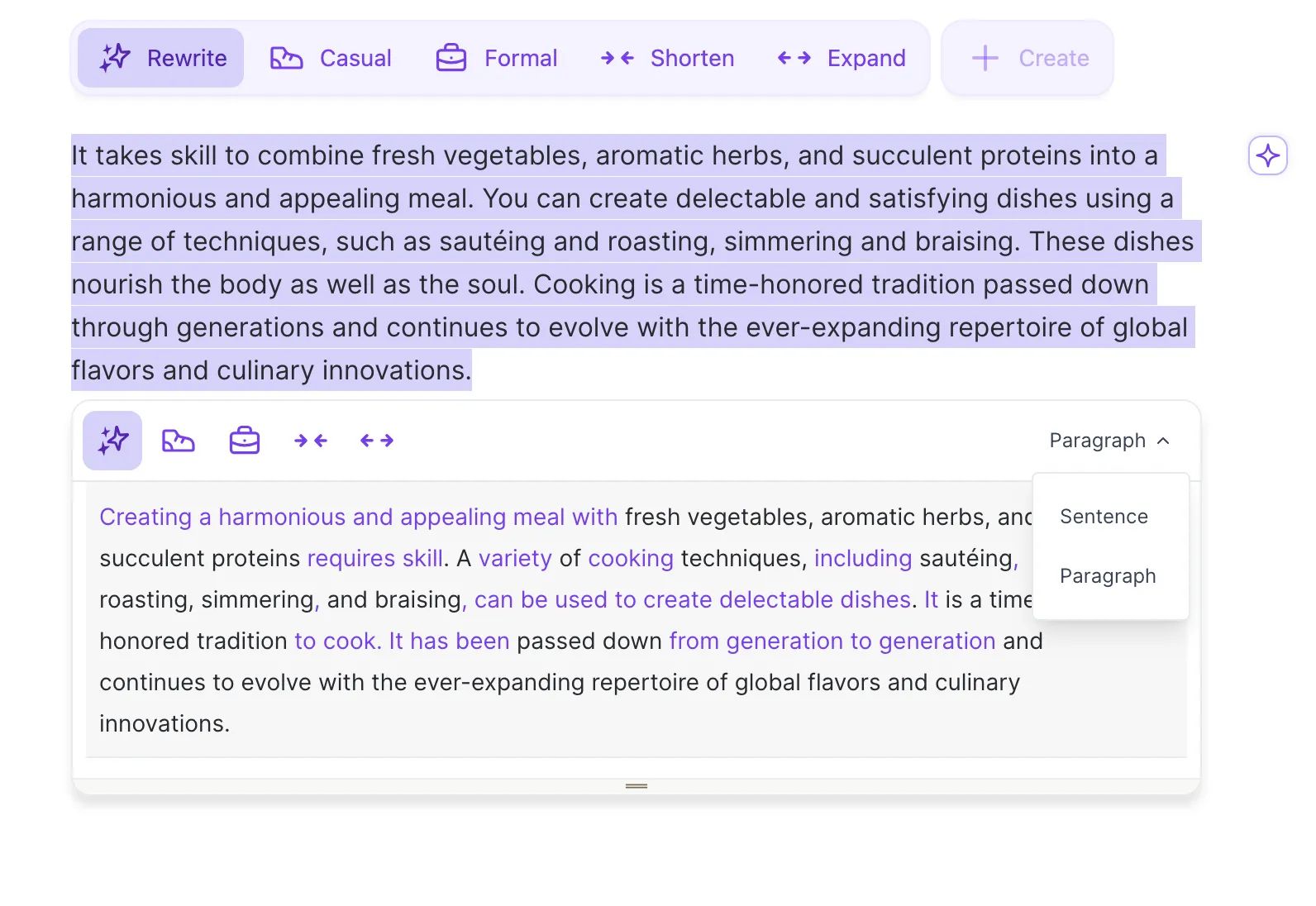
Wordtune is an AI-powered writing assistant that helps you rephrase, rewrite and improve your text so it sounds clearer, more natural and better suited to your audience. It suggests alternative phrasing, adjusts tone (formal, casual) and fixes grammar as you write.
How to Use It 🧭
1. Open Wordtune
Go to the Wordtune website or add the Wordtune extension to your browser so it can work in your writing apps.
Pro tip: Install the extension first — it works directly inside Gmail, Docs, LinkedIn and most web editors.
2. Highlight the Text You Want to Improve
Select a sentence or paragraph you’ve written. The Wordtune controls will appear.
Pro tip: Highlight only one section at a time to see more tailored suggestions.
3. Choose a Rewrite Option
Click Rewrite and browse the alternatives Wordtune offers. You can also switch tones (e.g., Formal or Casual), expand a sentence or shorten it.
Pro tip: Try both Formal and Casual variants — you might find a version that fits your audience and sounds better.
4. Replace with the Best Option
Click the suggestion you like and Wordtune will swap it into your text.
Pro tip: Read suggestions out loud — the best-sounding option usually feels clearer.
5. Repeat Through Your Draft
Go through your whole piece and refine sections until your writing is smooth and confident.
Pro tip: Use the Shorten and Expand tools to control pacing and readability.
Why It’s Useful ✨
Wordtune helps you express your ideas more clearly and find the right tone for your audience — whether it’s professional emails, social posts, reports or essays. It’s especially handy when you want to polish text quickly without rewriting manually.
Trending AI Tools
Warmbox – AI tool that warms up your email inbox to improve deliverability.
Xpression Camera – Turns photos into live animated avatars.
Writely – AI keyboard that improves writing as you type.
Wordtune – Rewrites text to improve tone and clarity.
Wisecut – AI video editor that cuts silences and adds captions.